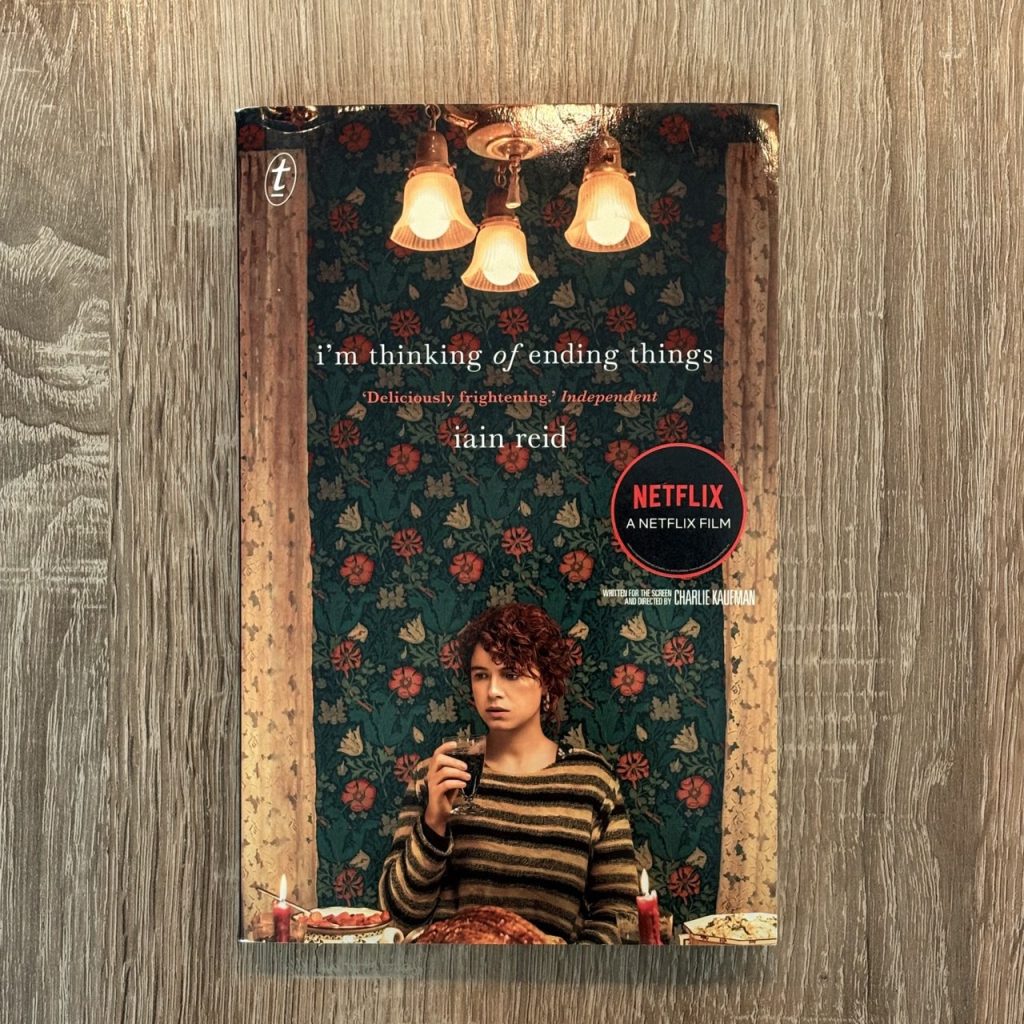
The big question at the core of “I’m Thinking of ending Things”, the one the novel poses as the one and only unanswered question, is as ancient as the human being DNA. It is the same eternal conundrum that pulses with intensity in Shakespeare’s Hamlet:”To be, or not to be: that is the question.”
The story is initiated from the point of view of a young female character named Lucy. She is traveling with her boyfriend Jake to meet his parents at their remote farmhouse. As they drive to reach the destination, she keeps asserting in her mind: “I’m thinking of ending things.” On the face of it, this assertion seems to relate to their relationship. However, at the end of this novel, the reader realizes that there is much more to this assertion.From the moment they leave on their journey, there is a definite sense of something being wrong. In the way that Jake’s parents seem peculiar. his mom talking about hearing whispers and their interactions being inexplicably choppy and unsettling, is a quality that is hard to describe and puts one on edge. The presence of the creepy paintings depicting a woman and child in the basement is merely one more element at play that tells us something is just not quite right. The quality that Reid creates here is one that is tense without being bombastic, by focusing on small and unsettling details. One can’t help but be aware that something is amiss with Jake’s history and his family.
During the return journey, the apprehension is exacerbated. Jake suddenly turns off the mainroad and takes a deserted one, defying Lucy’s insisting that they should return home as the storm is intensifying. He parks along a deserted school and later insists that someone was watching them from within. when Jake fails to return on time, Lucy is compelled to trail behind him. The reader is almost certain at this stage that Jake is menaced, possibly so much so that he might be violent. In the school building, Lucy is being stalked by the janitor as he is cleaning the building, and this is the point at which the story takes its greatest dramatic turn. The voice switches from Lucy’s first point of view to a chilling and shared voice that is simply “we.” Gradually emerges the real structure of this novel. A movement such as this among the various narratives is one that Iain Reid wields with a sharpness that is truly a model for any writer aiming for this sort of effect. Ultimately, however, the reader comes to understand that, Jake is indeed responding to that classic existential question.
Reading Iain Reid is always like being under a waiting hammer. I know this hammer is going to come down on my head at any moment. It is part and parcel of the reading experience. However, when the hammer comes down finally, I am never ready for it at any moment and in any way. But yes, I enjoy that moment when my perceptions all come crashing down.
Leave a Reply